
Nobu. What Three Words?
Interview with Nobuyuki ‘Nobu’ Matsuhisa at the Cala Di Volpe, Sardinia

When Nobu arrives at the Cala di Volpe in Sardinia, it’s an event.
Hotel Cala di Volpe is one of the most famous hotels in the world. It was founded back in 1962 by His Highness Prince Karim Aga Khan IV. The Prince (who died this year, aged 88) was massively instrumental in the creation of the Sardinia that we see today, and the Cala di Volpe was one of the first hotels built by his consortium (Consorzio Costa Smeralda).
As well as developing the coastline for tourism, the consortium was set up to protect the island’s natural beauty:
- Buildings must be low-rise to maintain the skyline. Check.
- Colours – ochre, sand, soft reds – should reflect the natural stones. Check.
- Buildings should also complement the lush Mediterranean vegetation of myrtle hedges, juniper trees, and the sparkling turquoise blue sea beyond. Also check.

Chef Nobuyuki Matsuhisa is one of the select few celebrities who are known by a single name (think Madonna, Sting, Cher, Prince), but in the world of chefs, Nobu may be the only one.
His project at the Cala di Volpe began with a ‘pop-up’ in 2018. His eponymous Matsuhisa restaurant followed the next year. Two icons came together.
He is here at the Cala di Volpe to reconnect with his team and review his summer menu for Matsuhisa [which is distinct from his Nobu restaurants in terms of partners, but not in concept or style of dishes].
‘I’m a happy person’
When I met him, he greeted me with the same warm smile that he wears on the cover of his autobiography ‘Nobu’, published in 2019.
I’ve done my research. In his autobiography, Nobu describes himself as a happy person, despite the struggles he’s had – losing his father at an early age, a partnership failure in Peru, his restaurant burning down in Alaska, and losing his best friend to suicide. He says that he always wants to move forward, ‘millimetre by millimetre’. Nobu is even philosophical when he learns that other Japanese restaurants are copying some of his most famous dishes. He sees it as a compliment, and a tribute to the excellence of his food – ‘Copy my recipes, but not my heart (‘kokuru’)’. Kokoru refers not only to the physical heart, but to the core of a person, their essential spirit and emotion.
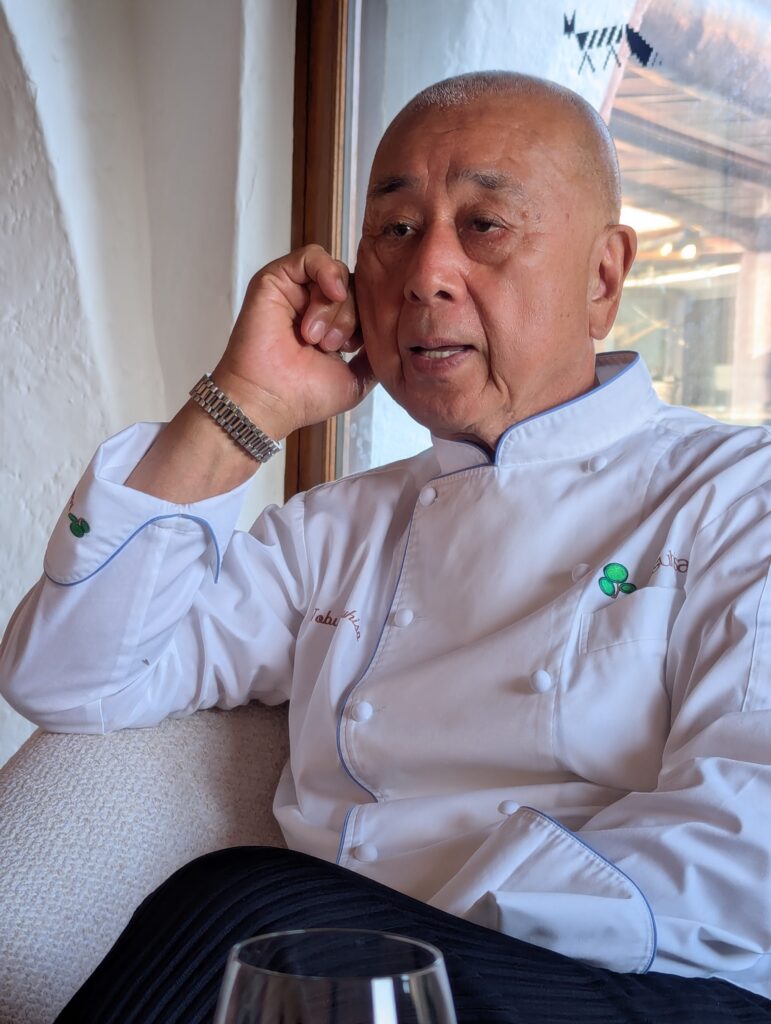
The sun is streaming through the window behind him, and Nobu, wearing his chef whites, with ‘Matsuhisa’ embroidered on his left breast, looks relaxed as I prepare to ask my first question, until he looks down at his watch.

The crime of being late is a step too far…
‘The others?’ he asks, referring to my fellow journos who have not yet arrived for the 6.30 pm start of our interview. ‘It’s 6.38… My time is money.’ He tuts, ‘Italians, Spanish, always late.’ He seems momentarily irritated, so I ask about his experience working with South Americans in Peru, where he first advanced his ‘Nobu-style.’ ‘The same…’ he laughs, his eyes crinkling, ‘… Always mañana [tomorrow]’.
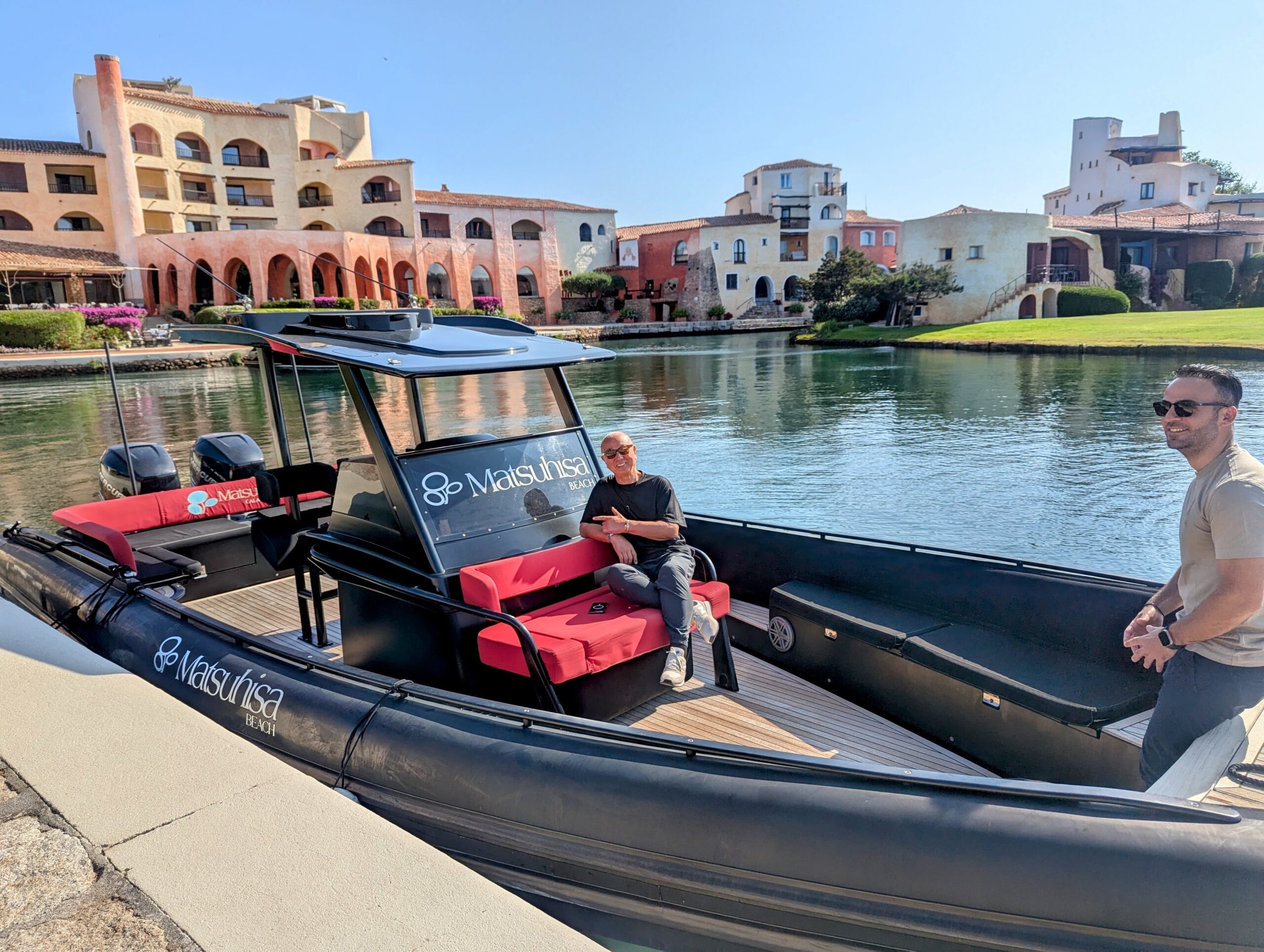
Then he asks me, ’Have we met?’ ‘Er, not really,’ I mumble, though I remind him that I had asked if I could take his photo as he sat on the ‘Matsuhisa’ boat that had brought him to the hotel the day before. ‘Ah…’. He possibly (though unlikely) remembers and smiles again. He’s impossibly polite, though now that I know about his strict time-keeping rule, I’m just glad to have arrived on time.
I understood from his autobiography that he travelled for ten months of the year, visiting his restaurants around the world to ensure that standards were kept high, ingredients were of the highest quality, and to reconnect with his teams, something he considers of the highest importance. But his autobiography is more than five years old, and his restaurants now number 56 (and counting) in 14 countries and on five continents. I open with a slightly tongue-in-cheek question.
He surely doesn’t still travel as much?
He does. So I ask what he eats for breakfast to set himself up for such a demanding schedule? Yogurt and fruit (kiwi and apple), followed by steamed vegetables, such as greens or broccoli, with two eggs and natto.
‘Do you know natto?’ he asks, with a wry smile.
I do, having also eaten it for breakfast when I visited Japan some years ago. An acquired taste, I’d say – whole soy beans that have been fermented with ‘Bacillus subtilis var. natto’, which gives them a nutty, slightly bitter flavour, a sticky, almost slimy texture, and a pungent aroma. I did not acquire the taste.
But beyond his healthy breakfast, I see from his Instagram feed that Nobu is also really interested in keeping fit, finding photos of him practising very challenging yoga stretches and poses (in between photos of his restaurant visits and selfies with friends, colleagues, and celebrities). He certainly looks incredibly fit and well, but as I’d scrolled through his Instagram, I was also reminded that I heard he posted a memorable selfie with a particular celeb – David Beckham – in July last year when the Beckhams visited Cala di Volpe for a ‘hush hush’ holiday. Secret, that is, until Nobu’s selfie went viral…

Nobu-style
Nobu originally created his style by combining Japanese and Peruvian flavours, including jalapeño chilli, coriander, and lime juice, so I wondered which ingredients he was drawn to in Italy. He didn’t hesitate. Olive oil, tomatoes, and Alba truffles. One of his favourite dishes is ‘risotto alla parmigiana’ (a simple risotto with Parmesan cheese), with white Alba truffles, which are only available from October to January.
But he is clear that, while he loves Italian food, he is not Italian, so he doesn’t cook in the same way. His self-belief in his own skills comes from the philosophy that one should work hard, with passion, and be considerate: ‘Always think of how the other feels.’ He is also a great believer in the idea that ‘Nothing should be wasted.’
And on that point, I knew that one of his most popular dishes came from the need to feed his staff after service. The story goes that he ‘simply’ combined two of the ingredients (yellowtail fish and jalapeño) that he found in the fridge. When asked for another example, he described the process of creating his ‘toro’ (the fat belly of a tuna fish) tartare. The tuna has a big bone, which, loath to waste, Nobu used to create a stock, with onion and garlic, dashi, soy sauce, and wasabi pepper sauce. The sauce is drizzled over raw toro and served with caviar. Now it’s another favourite dish.

Every dish has a story
Nobu believes that all of his dishes have a story, but never forgets a time when an American diner asked, ‘What would you recommend?’ So he prepared her a fresh white fish sashimi with a sauce on the side, but seeing that the fish was raw, she said, ‘I can’t eat that. I couldn’t eat raw fish…’ Nobu was clearly perplexed.
Even as he redescribed the scenario, he seemed somewhere between confused and slightly exasperated. She had asked for what he’d recommend, after all, but, always aiming to make people happy with his food, he took the plate back to the kitchen and, noticing an oil-filled pan smoking on the stove, spooned some of the hot oil onto the fish. It had the effect of slightly cooking the surface and changing the colour of the fish, but it was still essentially raw. He took it back to the table.
The American lady not only ate it, but also declared it delicious and went on to eat and enjoy more raw fish. He called it ‘Nobu-style sashimi.’ Such events still fill him with joy. He aims to please.
‘But what might you have liked to do?’
I understand that, in Japanese culture, Nobu’s birth date predicted that he would have been a chef or an architect. His father had been an architect, and he had planned to study architecture, but then did a swerve and decided to pursue a career as a sushi chef. But what if he hadn’t become a chef?
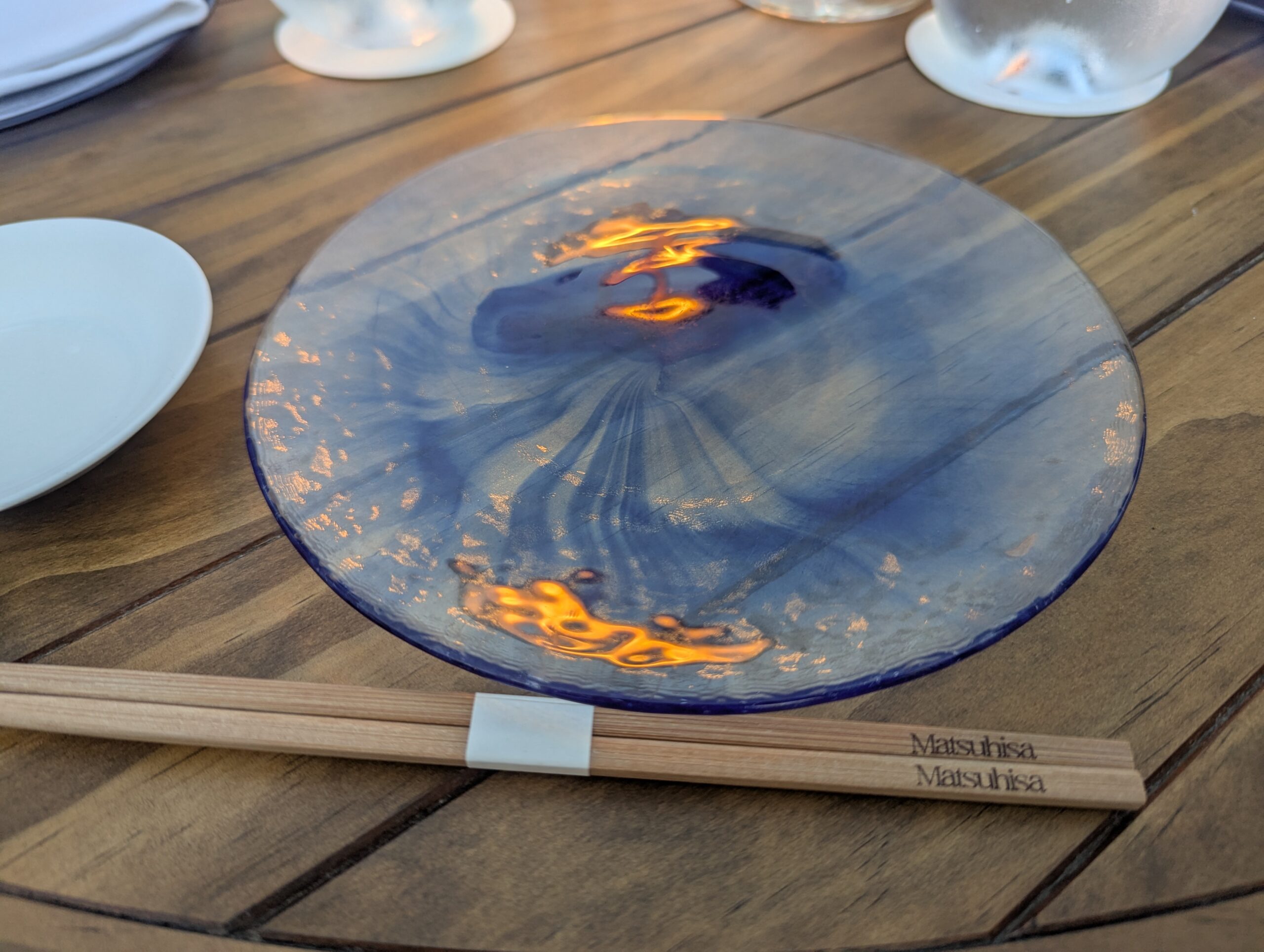
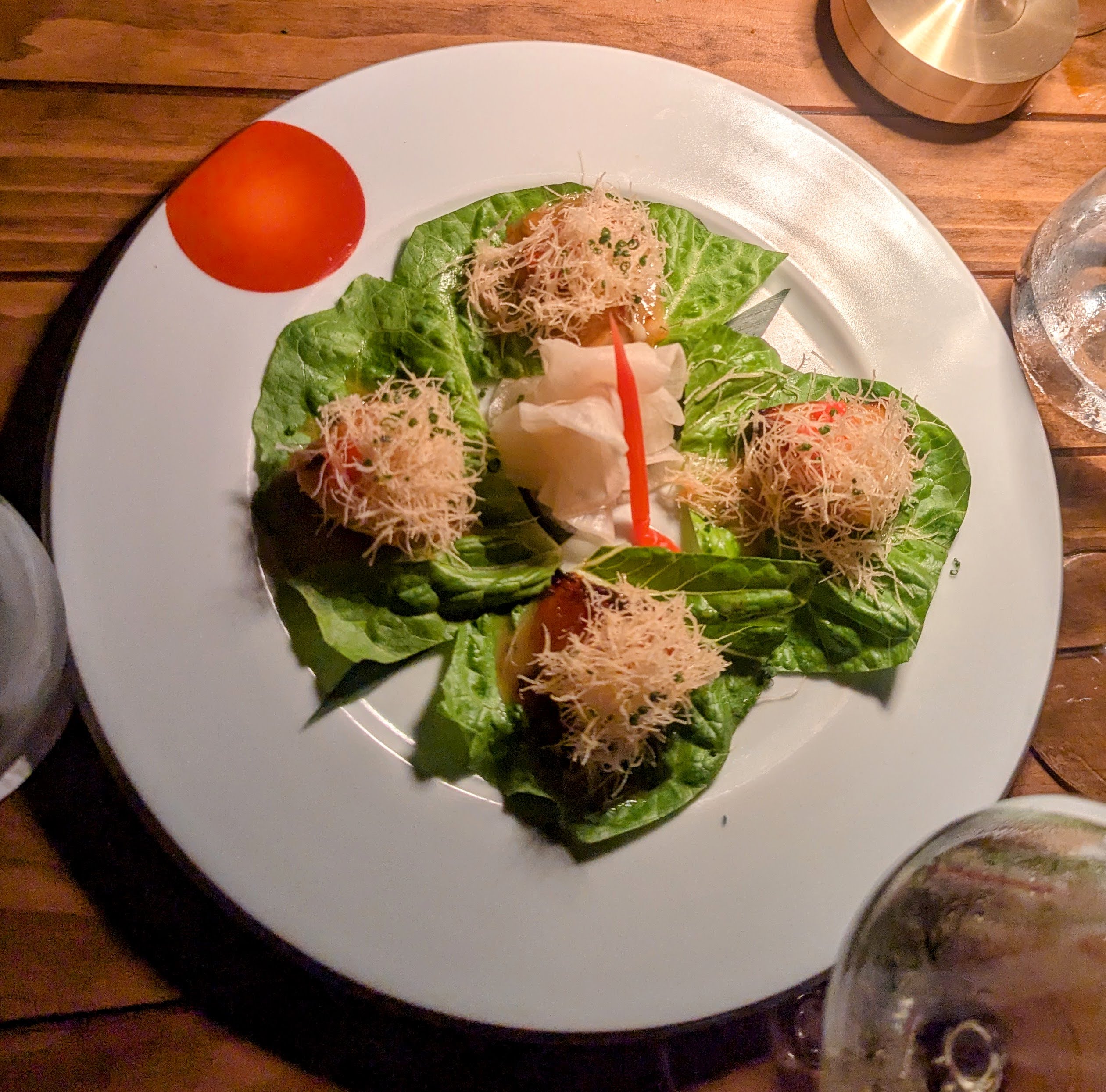
‘I like to paint,’ he said. He’s smiling again as he tells me how it works. ‘For me, the plate is like a canvas. I like to place my food like a painting, considering the natural colours and design.’ Then his face visibly lights up as he describes how he plates his famous black cod with miso – ‘the soft, tender (no bone) fish is sliced and laid, at an angle, on the [style and shape already considered, of course] plate, to give the dish balance and colour.’
The other journos have arrived, and Nobu is warming to the questions and takes the opportunity to regale us with his response to being asked whether he had a private chef. ‘Of course I have a private chef.’ His eyes twinkle at this point. ‘She’s my wife,’ he laughs. ‘She knows all of my favourite dishes, and ‘conditions’, and she makes the best noodles.’
So, what three words?
The Matsuhisa restaurant overlooking the bay is located in the original wing of the hotel that was designed by Jacques Couëlle back in 1958 (and starred in the 1977 James Bond film ‘The Spy Who Loved Me’). This summer, the restaurant has new tables on the pier and seafront garden, as well as completely renovated interiors, totally in keeping with the original almost-Moorish style, thanks to architects Moinard & Bétaille, whose philosophy is ‘Change everything in order to change nothing.’ It could be Nobu’s own mantra. The ingredients might change, but his fundamental ethos remains the same. ’A lot of young chefs make their food too complicated. That’s not my way.’
So what three words?
Quality. Simple. Tasty
Matsuhisa at Cala di Volpe
We couldn’t argue with that.
Seated at a beachfront table, just along from Nobu’s own table, we were treated to a steady stream of ‘uncomplicated’, delicious dishes created from the very best ingredients:
- White fish, dry miso, yuzu, olive oil, and garlic chips – an elegant mouth-burst of flavours and textures.
- Lobster tacos with tomato salsa and coriander – a dazzling sweet, spicy, herby sensation.
The meal continued with plate after plate of the finest, freshest dishes, all elegantly plated and guaranteed to tingle every tastebud…
- Yellowtail with jalapeño, coriander, yuzu, and soy sauce
- Zucchini with onion, ponzu, and garlic chips
- Spinach salad with yuzu, truffle, and bell pepper
- Sashimi salmon and tuna – to be dipped, fish-side down, Nobu told us earlier, into the soy sauce. Leaving grains of rice in the dipping sauce is the height of bad taste.
- Tuna with beetroot and red onion
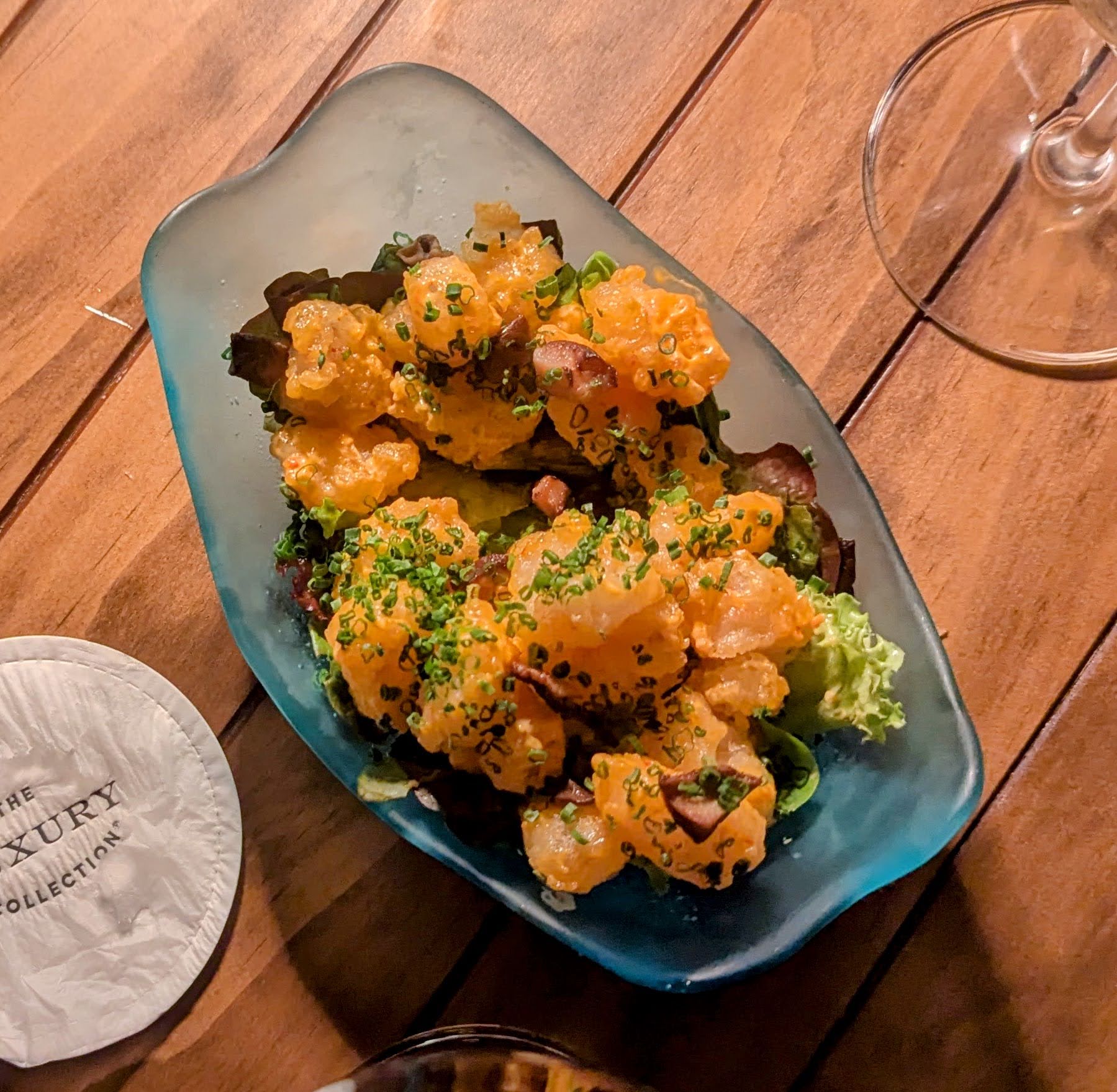
- Prawn taco
- Black cod with miso, butter lettuce, and kataifi (a type of shredded phyllo dough)
- Wagyu beef
- Asparagus with crispy leeks
In spite of the amount of food, the dishes were so light that we felt sated rather than overfull.
It was truly one of the finest dinners I’ve ever eaten.
- This year, there will be three new Matsuhisa openings, in Venice, Courchevel, Majorca, and Maui. And Nobu openings in Santiago, Coronado in California, Rome, and Cairo.
- ‘Nobu’, a documentary directed by Matt Tyrnauer, was released in US theatres on 27 June 2025. It will be released worldwide, including in the UK, on 2 July.
For more on Sardinia, check out some of my articles, including ‘The perfect holiday in Sardinia, Italy’s rugged island beauty‘, and ‘The 10 best things to do in Sardinia‘.
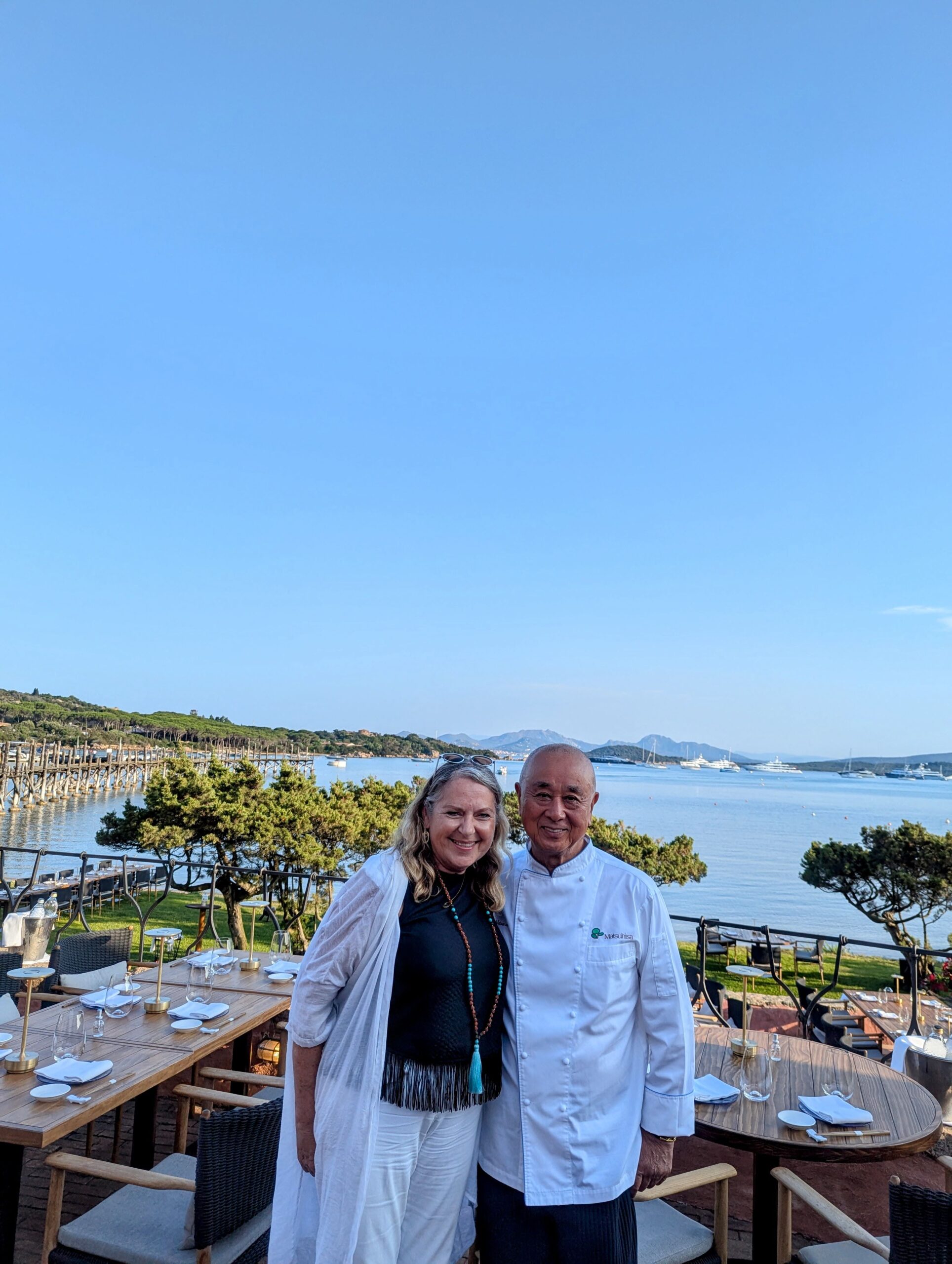
Jan Fuscoe travelled as a guest of Hotel Cala di Volpe.