
Daughters of the Etna soil
Wine, Women, and… Willpower
by Kate Fuscoe
November 2025
‘A Fimmina‘
Sicily’s Mount Etna – A Muntagna (or A Fimmina, in local dialect) – is female.
Maybe it’s because ‘Mamma Etna’ provides wonderfully fertile land, thanks to her rich, volcanic soil, or maybe it’s because there’s an ever-present threat of her erupting.
Wine, women…
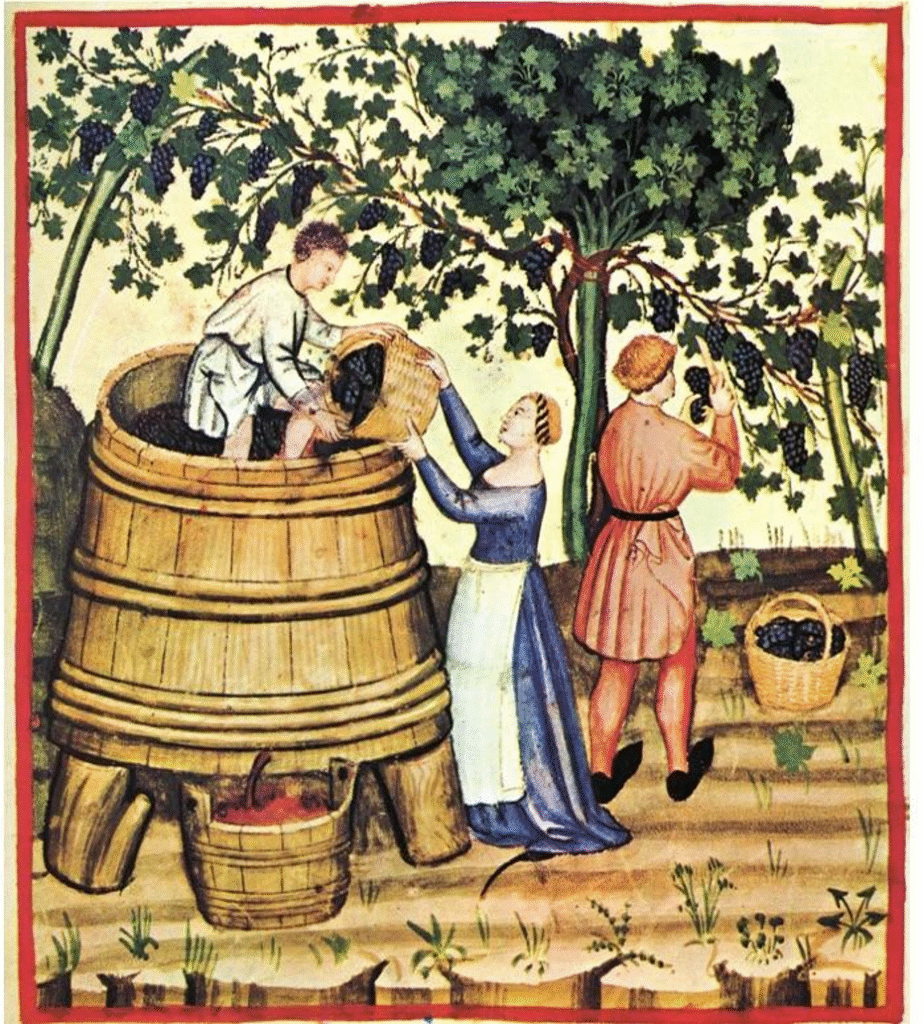
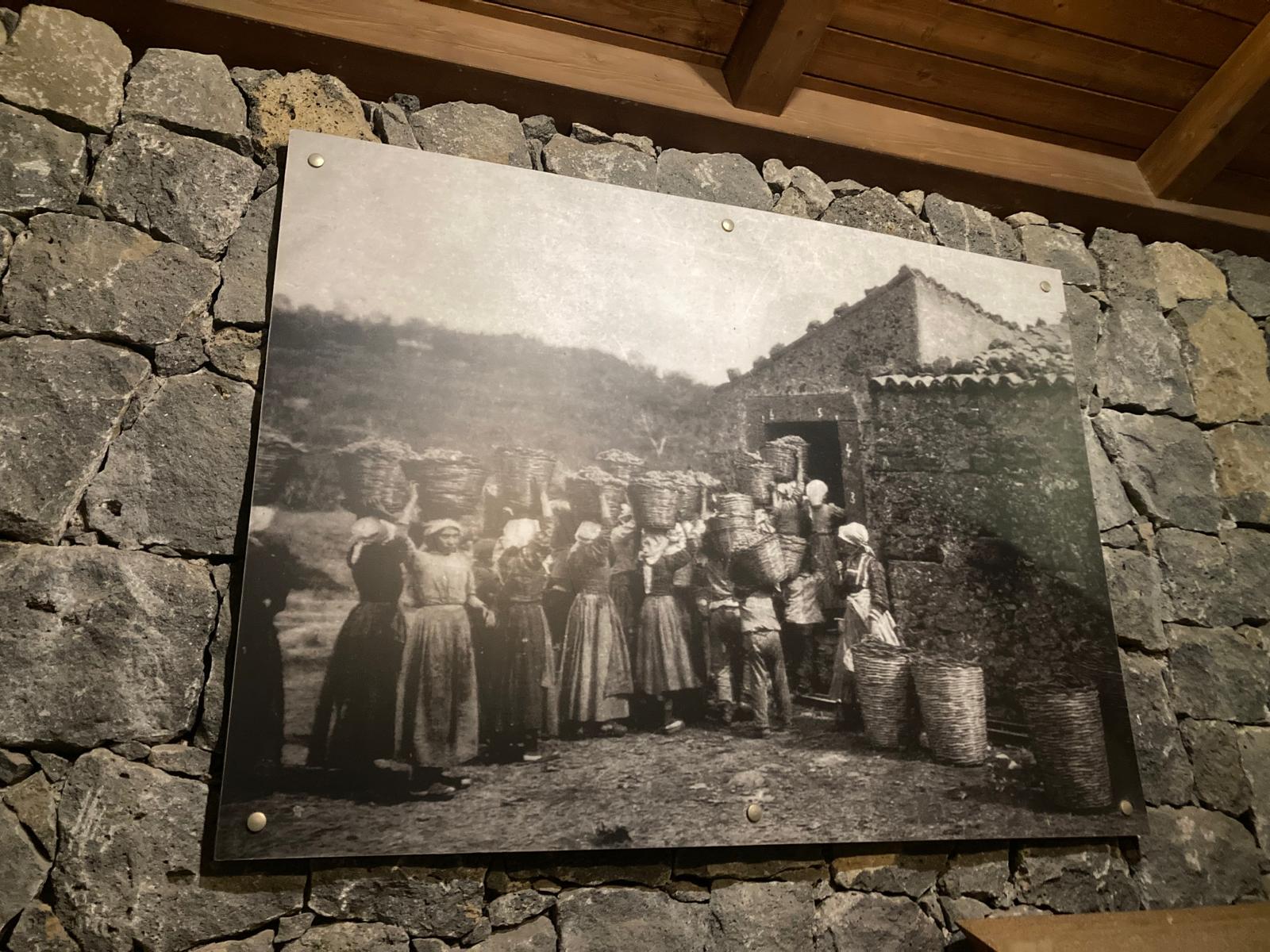
Italian women, and their children, have always been involved with wine-making – their agility and dexterity being prized for green pruning, selecting, and tying in the vines. Thanks to their lighter frames, women and children were also preferred to tread the first press of grapes. It’s said that many women even gave birth among the vines.
Today, it’s an exciting time to be on Etna. Wine production takes place on dozens of contrade (areas with distinct and varied weather and soil conditions) that are firmly focused on historic grapes.
There are more than 300 wine producers, ranging from family operations producing a small number of bottles to much larger concerns that export widely and have many hectares under production. But just as the area is gaining wider recognition for its quality wines, there’s another ‘eruption’ occurring here.
Today, there are more women heading up the Etna wineries[1], introducing innovations in winemaking, and facilitating more collaboration.
As a guest of Etna Days (an annual event celebrating Etna DOC wines), I had the opportunity to visit over a dozen vineyards, attend tastings, and discover more about the producers and their wonderful stories.
[1] Overall, in Italy, more than one quarter of winemakers are women. If that doesn’t sound like a lot, compare it to 14% in California.
Vivera Wines
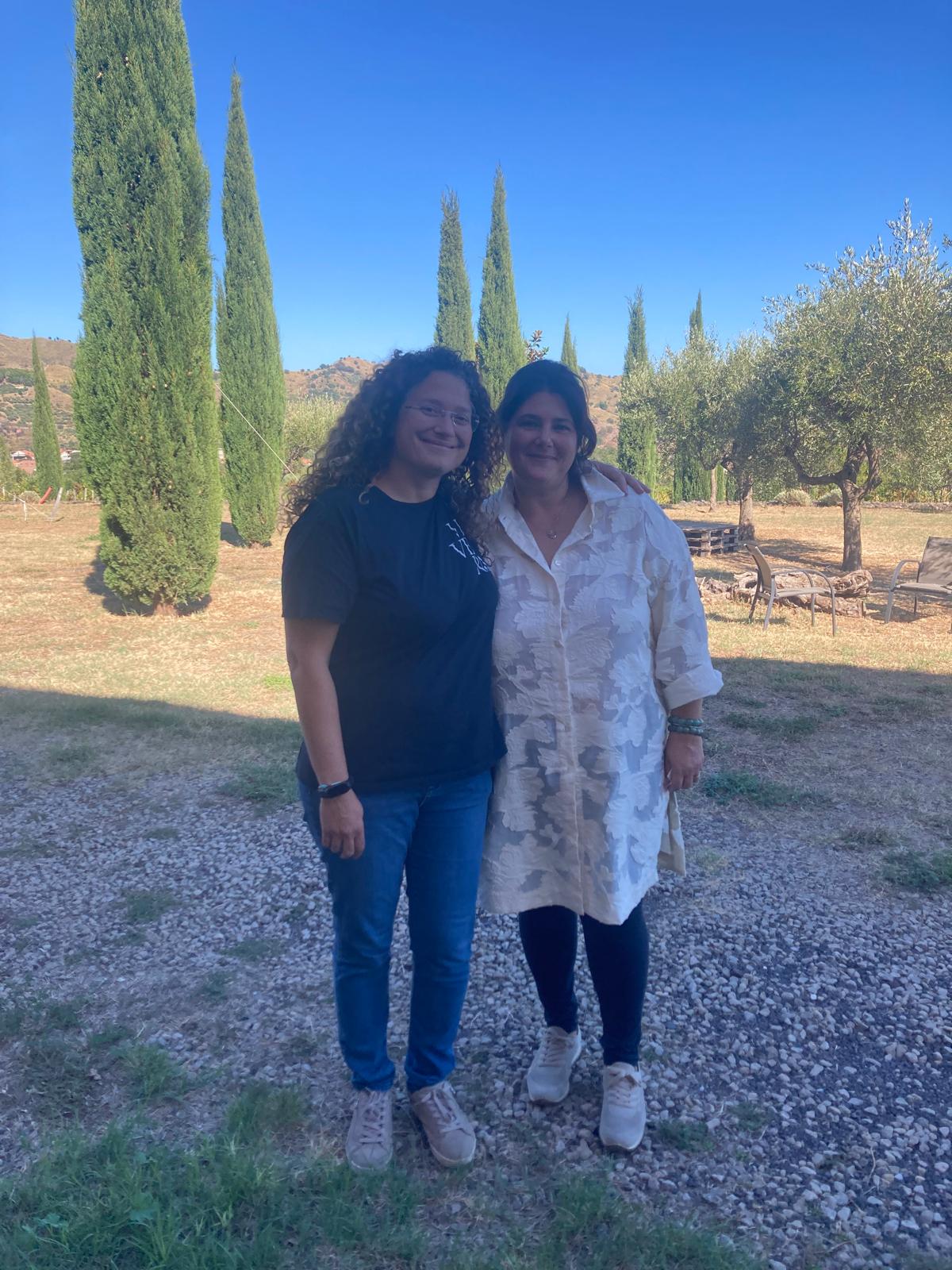
The Vivera Etna Bianco 2024 Carricante is a pure floral white wine, and my favourite so far. As Loredana Vivera, of Vivera Wines, explains, ‘We follow the grape’.
It sounds simple enough, but the collaboration and connection between owner, Loredana, and oenologist, Irena Vaccaro, is as refreshing as the wines they produce at Linguaglossa, Contrada Martinella.
‘When I interviewed Irena, I just knew we could get along,’ Loredana told me. She warmed to this woman who could hop from one language to another, just as she herself could.
And, despite her father advising against employing a woman winemaker (‘She might get pregnant!), Loredana persisted.
Many positive practices flourish in this region, with organic farming being a fundamental one. Nature does her bit by providing fresh breezes to help warm and cool the rich Etna soil. But making wine is not easy; the ancient terraces are held in by dry-stone walls that don’t allow the use of a tractor, so traditional customs continue – most everything is still done by hand, including the grafting of the vines.
Another less labour-intensive tradition is lunch, which is a time to relax and share.
As we sat down to enjoy our home-cooked fare, a 12-year-old boy wandered through and had his head tousled by the folk there. So, having a child is clearly not a barrier for women who work together and share a passion for winemaking.
There’s so much energy and dynamism here, especially within wine-making. But Etna is still a Sicilian mum. Behave yourself and you’ll be OK, but if you don’t… she’ll let you know.
Antichi Vinai
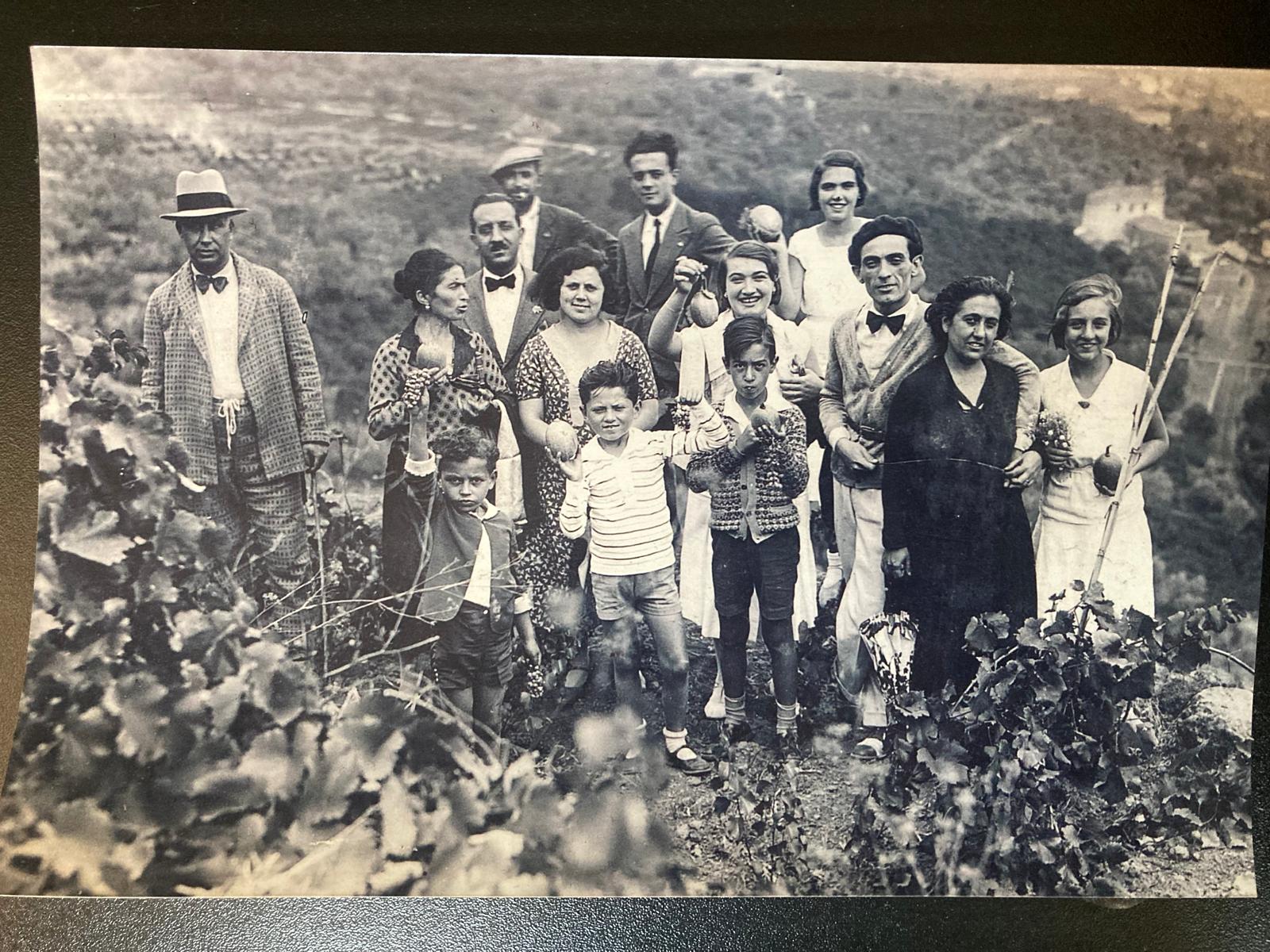
Further along my wine tour with Etna Days, I met Viviana Gangemi, a 5th-generation winemaker at her family’s producer, Antichi Vinai, which was established in 1877.
Having completed her studies in vinology in northern Italy, Gangemi returned with some innovative ideas for the family business, which produces some fabulous wines, and is now experiencing a growing interest in sparkling wines.
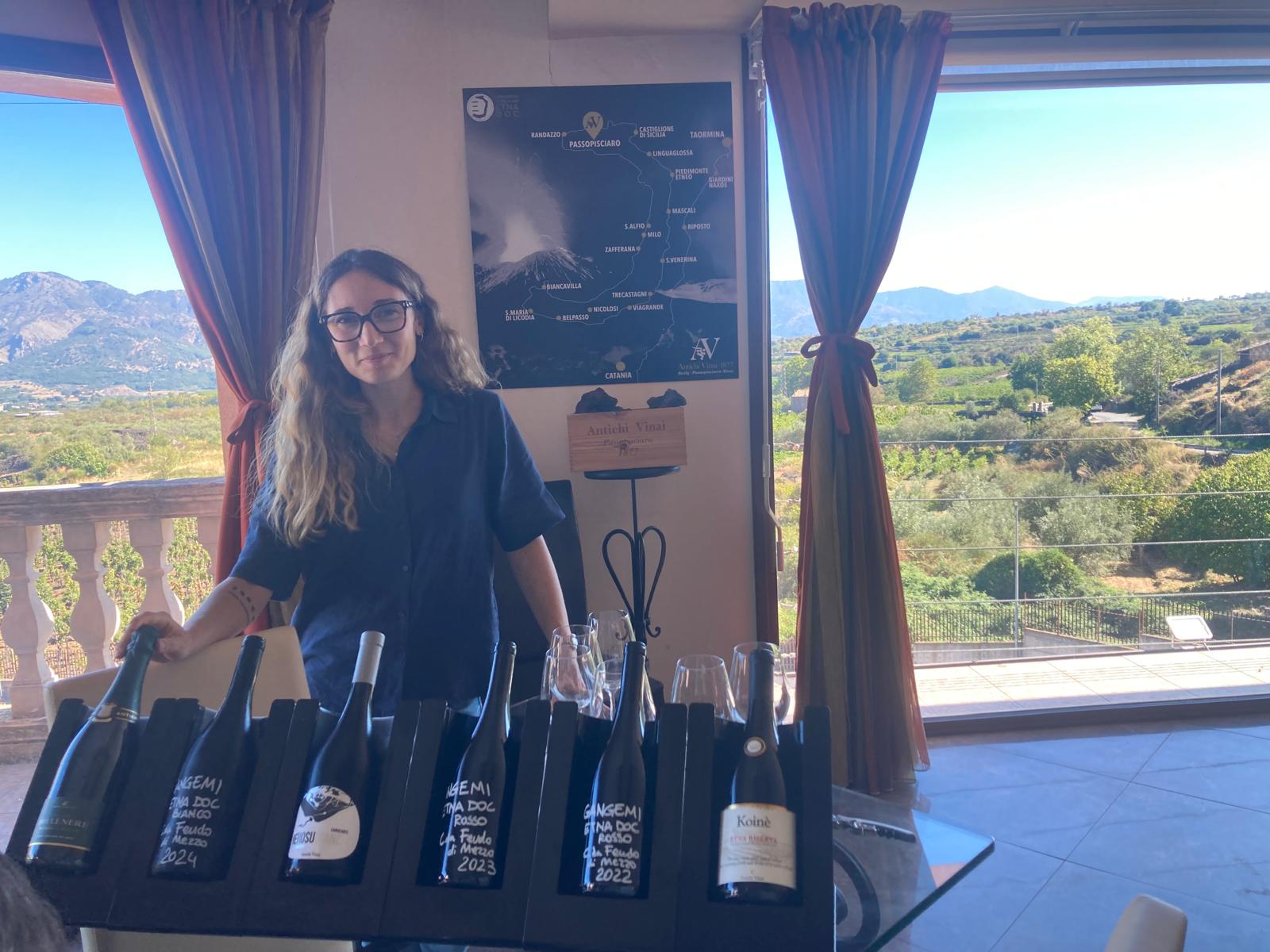
The Bollenere Etna DOC 2016 is a fine example of the classic method, with honeyed flavour and gentle fizz. Viviana is excited to tell us that she is producing a new series of wines under the family name, Gangemi, concentrating on grapes from a small contrada, Feudo di Mezzo. As we walk among the vines, she points out the holes where the ash from Etna has swirled down. As Mamma Etna can let us know when she’s angry, Viviana points out that modern technology can re-route the lava should she erupt.
Tenute Nicosia
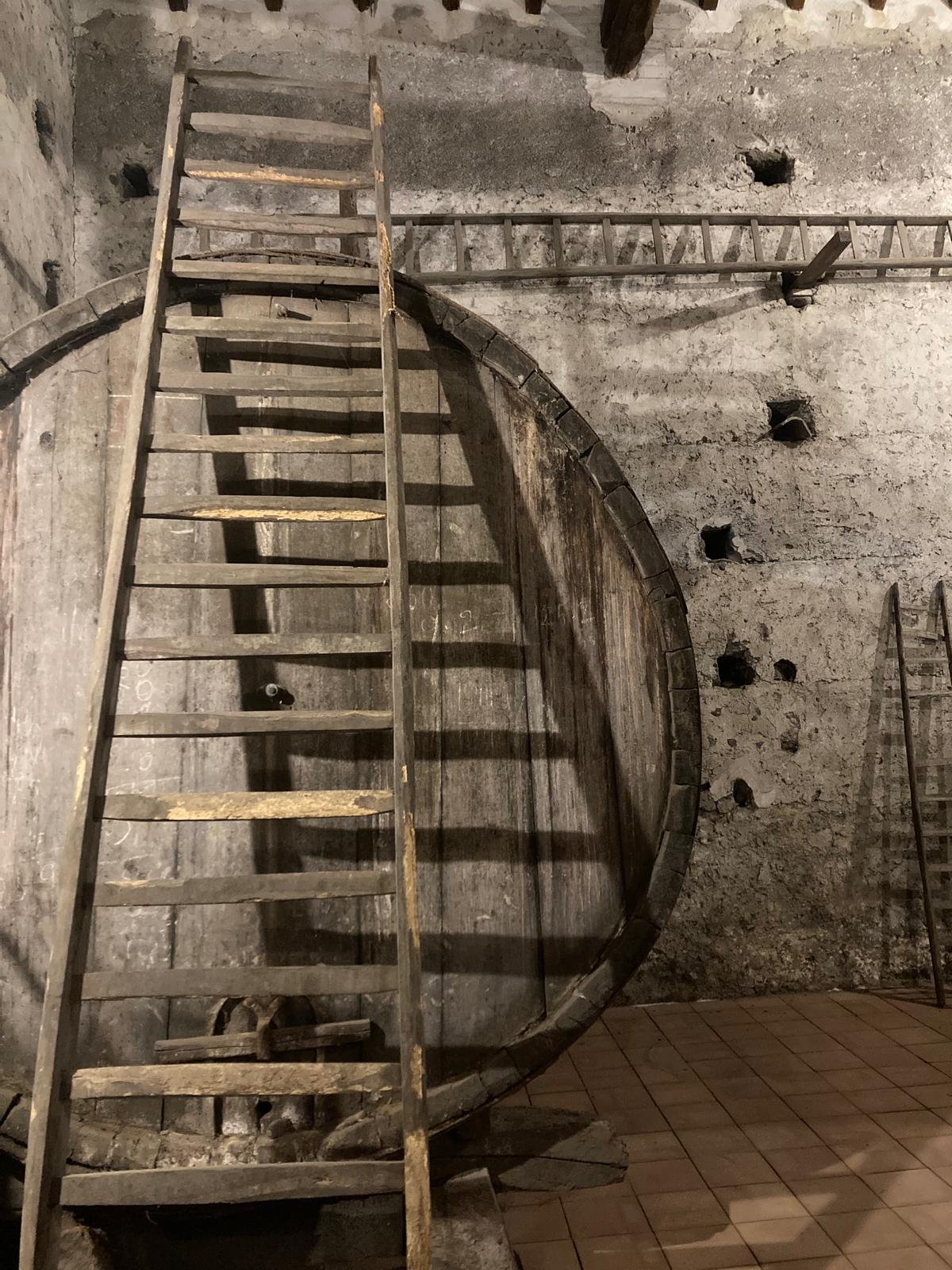
Along with historic practices comes innovation. Tenute Nicosia winery was established in 1898 by Carmelo Nicosia, and, in 1952, it was among the first to bottle its own wine. On our visit, we saw some of the prototypes, along with historic implements and photos, in their mini-museum.
In 2008, Maria Carella was employed at Tenute Nicosia, one of the first women winemakers in the region, and she’s still here, working alongside her husband Alessandro, the estate agronomist.
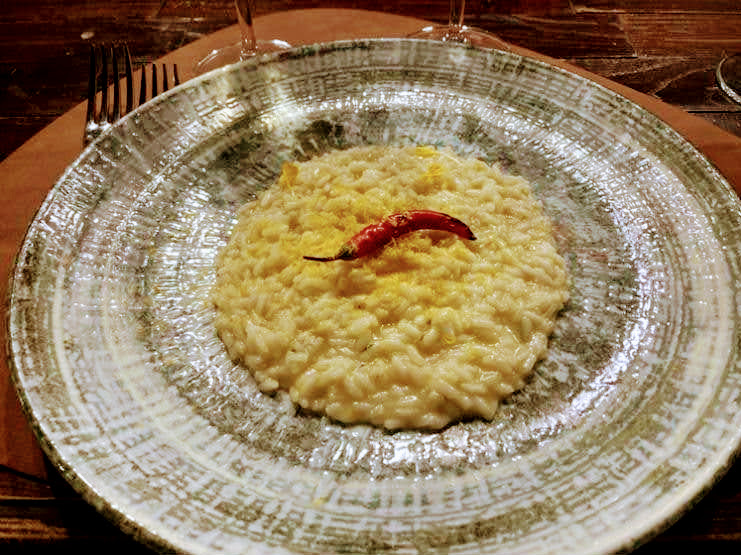
As we sit around the table and eat delicious Sicilian risotto and homemade ginger ice-cream, we’re aware of a strong seam of hospitality, respect, and close-knit working that underpins winemaking success here.
While there are currently only a handful of women winemakers in the Etna region, many more are leading the charge in marketing, managing, and tourism.
Campore Fumante
Cristina and Maria Pia Madaudo are not the winemakers at Campore Fumante; that’s Dad’s role. A man of few words, he leaves the public-facing side to the girls and Mum, who are happy to detail their innovations, which include wine tastings, of course, elegant lunches in their designated restaurant, massages among the vines, and even weddings in the onsite consecrated chapel. Not Sicilian weddings, of course, because, as they pointed out, those would invariably involve hundreds of guests! The community is large and close-knit.
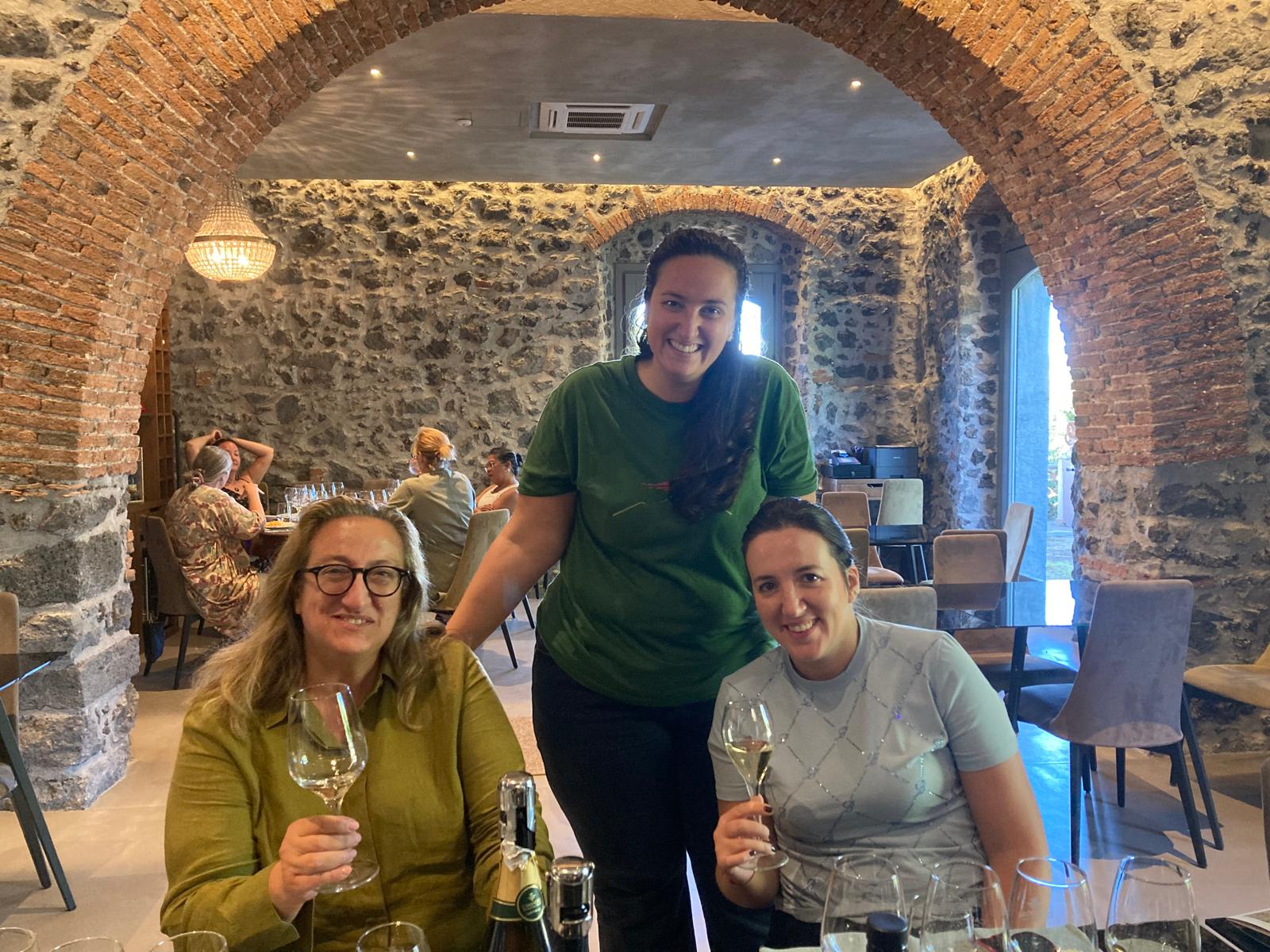
As well as helping with the winery, Cristina is a trained doctor and, as a cardiologist, she’s confident in stating the many benefits of their wines, which are abundant in polyphenols. She could even write us a prescription as to how many glasses! Maria Pia, as the lawyer of the family, is a bit more circumspect, but we all agree that the proposed inclusion of a swimming pool in this already sumptuous location, with its own train station, would be rather special.
All the Sicilian women that I met really are something. When I ask about the two ceramic heads that I’ve seen in several locations, Signora Madaudo explains to me that legend has it that a Moor fell in love with a Sicilian woman, but he later revealed that he had a family back home. In a fit of rage, she cut off his head and planted a basil plant there, where it flourished, some say watered by her tears. The neighbours were so impressed with her fantastic basil that they soon created their own ceramic vases, a tradition that continues today.
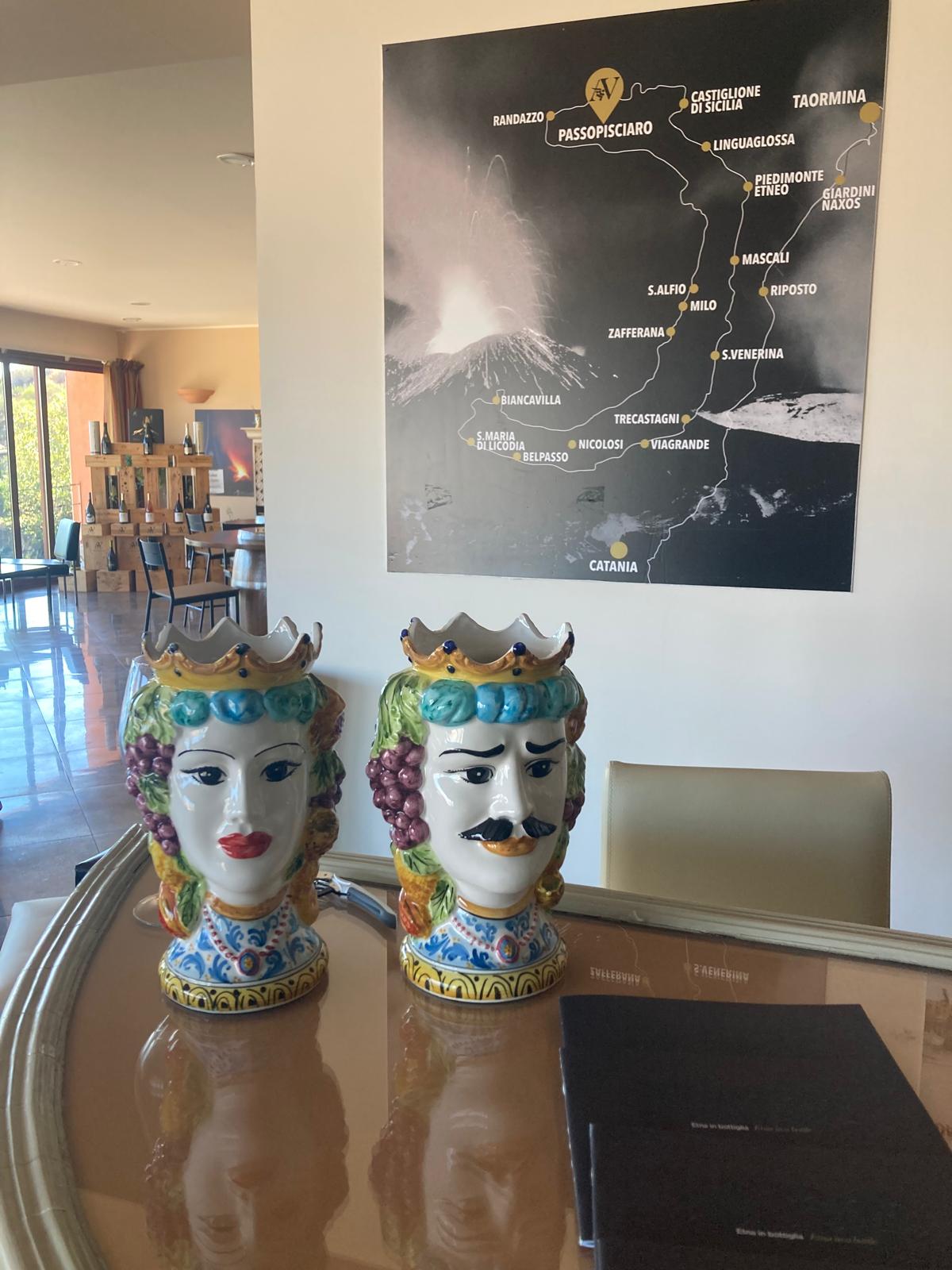
The Testa di Moro legend might also suggest that you should never cross a Sicilian woman.