
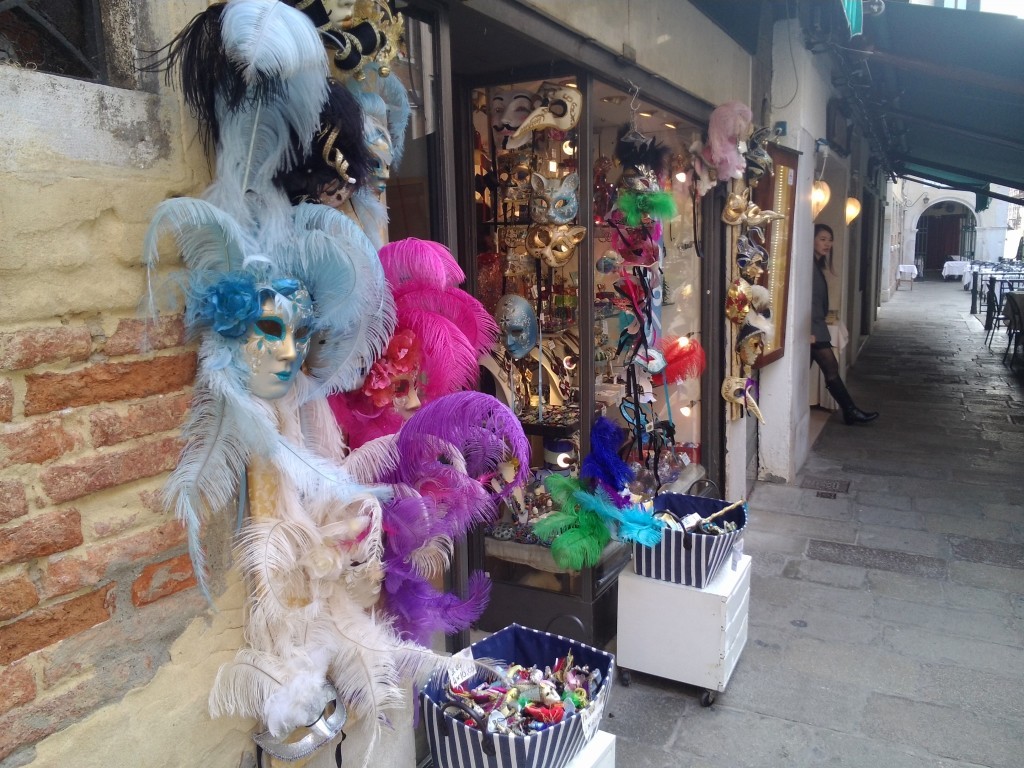
Carnival time
Venice, the most flamboyant of all the Italian Carnivals, is famous for its political satire. But the rest of Italy also celebrates carnival. Find out more below:
VENICE
www.carnevale.venezia.it
Palaces throughout the city host grand masked balls. Immerse yourself in the Serenissima’s festive history. During the world’s most famous masked ‘open city’ party, every corner of Venice comes alive. St Mark’s Square is a continuous workshop of colours, masks, music. Carnival’s traditional events include ‘Flight of the Angel’, ‘Festa delle Marie’, and ‘La Colombina’.
VIAREGGIO
www.viareggio.ilcarnevale.com
Viareggio hosts the traditional shows of gigantic papiermaché figures on colourful floats.
IVREA
www.storicocarnevaleivrea.it/English/
Here in Piedmont, traditional sounds of pipe and drum bands open Ivrea’s festival. Its most spectacular event – the Battle of the Oranges – usually takes place on the Sunday. The ‘battle’ takes place in the main squares of the town. Two sides: one in carriages (representing the overlords) and the other on foot (representing the commoners). Participants wear protective helmets when the battle commences.
DEI FIGLI DI BOCCO
Castiglion Fibocchi – Arezzo:
www.carnevaledeifiglidibocco.it
Castiglion Fibocchi is situated along the Roman road called Cassia Vetus, near the mountain of Pratomagno: a chaming Arezzo town dating back to the medieval period, the XII century. Participants wear fabulous baroque costumes and artistic papier maché masks.
ACIREALE
www.carnevaleacireale.com
Catania’s Carnival of Acireale, is known as the most beautiful, exciting and fun in all Sicily. The parade is held throughout the downtown area where the main baroque attractions of the city of can be found. The crowd is left completely free to roam the circuit without being enclosed behind barriers. Twinned with the Carnival of Viareggio, it has a rich programme of events.
PUTIGNANO
www.carnevalediputignano.it
The Carnival of Putignano, a lovely town in Puglia south of Bari, is one of the oldest in Europe and one of the most important in Southern Italy. Allegorical floats and masks, masquerades, food and wine entertain visitors through the streets of the town during the Carnival days. The mascot of the Carnival of Putignano is called ‘Farinella’, named after a local dish made from chickpea and barley flour.
FANO
www.carnevaledifano.eu
After the Ivrea Carnival, the Fano Carnival in the Marche region is the oldest in Italy and allegorical floats and masks, masquerades, shows and fireworks all form part of it. What makes the Fano Carnival special is the launch of tons of sweets from the floats to the crowds of spectators and the special music accompanying the Carnival: the Arabita music is played with musical instruments and various other objects.
ARCO
Arco in Lake Garda – Trentino:
www.carnevalarco.com
The colours, costumes, music and merriment: Carnival has always been the favourite festival of children, but in Garda Trentino it is a joy for grown-ups too. It promises rites associated with the reawakening of life, local fairs, food festivals and plenty of fun! During carnival, a traditional parade of allegorical floats winds through the streets of the small town. Splendid balls in which the guests are dressed in costumes from the Hapsburg period are held in the rooms of the Casino.
MUGGIA
Muggia, Trieste:
www.carnevaldemuja.com
The Carnival of Muggia, a small town near Trieste, is one of the most famous in Friuli. The event includes parades of allegorical floats, masked people dancing in the street accompanied by
music played live by local bands, and typical Muggia fish specialities are served.
BAGOLINO
Bagolino , near Lake Idro (Brescia):
www.bagolino.net
The Carnival of Bagolino, a small village near Lake Idro, is unique in Italy. The ancient tradition is deeply rooted within the hearts of the people of Bagolino and Ponte Caffaro. ‘The Balarì’ are the dancers, and ‘The Mascher’ are the masked. The origins of dances and music relating to the Balarì are 16th century, while the origins of the Mascher seem to be older. Both wear richly adorned costumes and for the melodies and dances. Celebrate this pagan tradition during the days preceding Shrove Tuesday.
I’ve also written about films made in Venice. Read ‘Lights, Camera, Action… ‘ here.
Read articles on some other Festivals around the world here.
And for everything else, take a look here.